Did you know that the "Grand Canyons of the Sea" can be found off Alaska's coast?
And that these two underwater canyons are prominent "Green Belt" features?
And that Bering Sea commercial fishing vessels, including factory trawlers "the size of ocean liners," are dragging nets and longlines through the canyons?
And that these canyons, which are "remarkable biologically," really should be protected?
And that the North Pacific Fishery Management Council, which is meeting this week in Anchorage and lacks "conservation seats," probably won't do the right thing without a push from Greenpeace and other groups?
Read all about it and see lots of pictures here.
Showing posts with label Bering Sea. Show all posts
Showing posts with label Bering Sea. Show all posts
More territory for snow crabbers
Ice has covered much of the Bering Sea crabbing grounds, bedeviling the snow crab fleet.
Now the state Department of Fish and Game is providing some relief by opening an additional area to fishing, starting tomorrow.
Here's the official announcement.
Thus far, individual fishing quota holders have taken 46.9 million pounds of snow crab, or about 59 percent of the total allowable catch.
The season is scheduled to close at the end of May.
Now the state Department of Fish and Game is providing some relief by opening an additional area to fishing, starting tomorrow.
Here's the official announcement.
Thus far, individual fishing quota holders have taken 46.9 million pounds of snow crab, or about 59 percent of the total allowable catch.
The season is scheduled to close at the end of May.
A big little fishery
So, did you know they do a little trawling in Prince William Sound?
Yep. Looks like pelagic trawlers just cleaned up 6.1 million pounds of walleye pollock.
That's enough for a whole bunch of fish sandwiches, but it's hardly a nibble compared to the 2.65 billion pounds the big boys are chasing this year in the eastern Bering Sea.
Yep. Looks like pelagic trawlers just cleaned up 6.1 million pounds of walleye pollock.
That's enough for a whole bunch of fish sandwiches, but it's hardly a nibble compared to the 2.65 billion pounds the big boys are chasing this year in the eastern Bering Sea.
Council trims Bering Sea pollock quota
 Great for salads and sandwiches. NMFS photo
The North Pacific Fishery Management Council has set the 2012 total allowable catch (TAC) for Bering Sea and Aleutian Islands groundfish.
Here are the TACs for key species and the percent change from 2011.
Eastern Bering Sea pollock, 1,200,000 tons, down 4.2 percent
Pacific cod, 261,000 tons, up 14.5 percent
Yellowfin sole, 202,000 tons, up 3.1 percent
Atka mackerel, 50,763 tons, down 4.4 percent
Pacific Ocean perch, 24,700 tons, no change
Sablefish, 4,280 tons, down 9.9 percent
The TACs are subject to U.S. commerce secretary approval.
Severe weather coming; trawler needs assist
Deckboss is sure you've seen some of the many media reports of rough weather sweeping into the Bering Sea and Western Alaska.
The U.S. Coast Guard this afternoon issued this press release talking about its preparations, plus efforts to asset a disabled trawler.
The release says in part:
The Coast Guard and commercial services are currently responding to a request for assistance from the 143-foot fishing trawler Rebecca Irene 138 miles northwest of Unimak Pass in the Bering Sea.
Communications Station Kodiak received a call from the master of the fishing vessel at 3:45 a.m. reporting that one of their engines had become inoperable and they were under way with limited propulsion. They are headed toward Unimak Island at about 6 mph with 34 people aboard. The weather is forecast to degrade to 55 mph winds with seas of 35-feet by late afternoon.
The cutter Sherman is currently on scene and is planning to take all nonessential Rebecca Irene crewmembers aboard. The transfer will be conducted using the Sherman's small boat.
The parent company of the Rebecca Irene has contracted with Magone Marine of Dutch Harbor for the tug Double Eagle to respond and tow the fishing vessel.
The U.S. Coast Guard this afternoon issued this press release talking about its preparations, plus efforts to asset a disabled trawler.
The release says in part:
The Coast Guard and commercial services are currently responding to a request for assistance from the 143-foot fishing trawler Rebecca Irene 138 miles northwest of Unimak Pass in the Bering Sea.
Communications Station Kodiak received a call from the master of the fishing vessel at 3:45 a.m. reporting that one of their engines had become inoperable and they were under way with limited propulsion. They are headed toward Unimak Island at about 6 mph with 34 people aboard. The weather is forecast to degrade to 55 mph winds with seas of 35-feet by late afternoon.
The cutter Sherman is currently on scene and is planning to take all nonessential Rebecca Irene crewmembers aboard. The transfer will be conducted using the Sherman's small boat.
The parent company of the Rebecca Irene has contracted with Magone Marine of Dutch Harbor for the tug Double Eagle to respond and tow the fishing vessel.
Cod boat to be towed to Dutch after engine fire
This just in from the U.S. Coast Guard:
Oct. 28, 2011
Coast Guard escorting fire-damaged fishing vessel
KODIAK — The Coast Guard cutter Sherman is escorting the fishing vessel Alaskan Leader toward Dutch Harbor after the vessel sustained fire damage.
The Coast Guard in Kodiak received notification Thursday night of a fire in the engine room aboard the 150-foot Alaskan Leader.
The vessel was 103 miles northwest of Unimak Pass in the Bering Sea.
The Coast Guard issued an urgent marine information broadcast over HF and VHF radio channels requesting the support of any vessels in the area.
The fishing vessels Frontier Explorer, Frontier Spirit and Eastern Wind responded to the broadcast and arrived on scene to render assistance. The Coast Guard also diverted the cutter Sherman from its patrol to assist.
The Alaskan Leader crew was able to extinguish the fire themselves by 9:30 p.m. No injuries have been reported among the 23 crew.
The engine room reportedly suffered extensive damage from the starboard engine fire.
The master of the vessel reported they were able to resume their voyage using their port main diesel engine and auxiliary generator, manual steering and manual throttle control.
The Sherman arrived on scene at 3:30 a.m., allowing the three good Samaritan fishing vessels to return to their previous activities.
The vessel is currently under way at 6 mph about 63 miles from Dutch Harbor.
A commercial tug, contracted by the owner, is on scene with the vessel. It will tow the Alaskan Leader to Dutch Harbor. Once in tow the Sherman crew will return to its patrol.
The tug and fishing vessel are expected to reach Dutch Harbor this afternoon.
"The Coast Guard takes fishing vessel safety very seriously and the vessel will be met by marine casualty investigators and inspectors from Marine Safety Detachment Unalaska to assess the damage," said Lt. Cmdr. Bradley Clare, the Coast Guard Sector Anchorage chief of inspections.
The Alaskan Leader is a Kodiak-based catcher-processor and is carrying 5,000 to 6,000 gallons of diesel fuel and 9,000 pounds of frozen cod.
The Sherman is a 378-foot high endurance cutter from San Diego.
Oct. 28, 2011
Coast Guard escorting fire-damaged fishing vessel
KODIAK — The Coast Guard cutter Sherman is escorting the fishing vessel Alaskan Leader toward Dutch Harbor after the vessel sustained fire damage.
The Coast Guard in Kodiak received notification Thursday night of a fire in the engine room aboard the 150-foot Alaskan Leader.
The vessel was 103 miles northwest of Unimak Pass in the Bering Sea.
The Coast Guard issued an urgent marine information broadcast over HF and VHF radio channels requesting the support of any vessels in the area.
The fishing vessels Frontier Explorer, Frontier Spirit and Eastern Wind responded to the broadcast and arrived on scene to render assistance. The Coast Guard also diverted the cutter Sherman from its patrol to assist.
The Alaskan Leader crew was able to extinguish the fire themselves by 9:30 p.m. No injuries have been reported among the 23 crew.
The engine room reportedly suffered extensive damage from the starboard engine fire.
The master of the vessel reported they were able to resume their voyage using their port main diesel engine and auxiliary generator, manual steering and manual throttle control.
The Sherman arrived on scene at 3:30 a.m., allowing the three good Samaritan fishing vessels to return to their previous activities.
The vessel is currently under way at 6 mph about 63 miles from Dutch Harbor.
A commercial tug, contracted by the owner, is on scene with the vessel. It will tow the Alaskan Leader to Dutch Harbor. Once in tow the Sherman crew will return to its patrol.
The tug and fishing vessel are expected to reach Dutch Harbor this afternoon.
"The Coast Guard takes fishing vessel safety very seriously and the vessel will be met by marine casualty investigators and inspectors from Marine Safety Detachment Unalaska to assess the damage," said Lt. Cmdr. Bradley Clare, the Coast Guard Sector Anchorage chief of inspections.
The Alaskan Leader is a Kodiak-based catcher-processor and is carrying 5,000 to 6,000 gallons of diesel fuel and 9,000 pounds of frozen cod.
The Sherman is a 378-foot high endurance cutter from San Diego.
Bering Sea snow crab quota surges by 64 percent
Yesterday brought bad news on Bristol Bay red king crab, historically the state's most valuable crab crop.
Today comes good news on another major fishery, Bering Sea snow crab.
The total allowable catch for the upcoming season is 88.9 million pounds, up 64 percent from last season's 54.3 million pounds.
The season opens at noon Oct. 15, but typically the fleet waits until after the first of the year to take most of the crab.
Here's a press release from the Alaska Department of Fish and Game.
Today comes good news on another major fishery, Bering Sea snow crab.
The total allowable catch for the upcoming season is 88.9 million pounds, up 64 percent from last season's 54.3 million pounds.
The season opens at noon Oct. 15, but typically the fleet waits until after the first of the year to take most of the crab.
Here's a press release from the Alaska Department of Fish and Game.
Steady on for pollock
This summer's Bering Sea bottom trawl survey showed a "slight decrease" in the pollock biomass compared to 2010, the National Marine Fisheries Service reports. Details here.
Oregon vs. Alaska?
Evidently some commercial fishermen in Oregon, specifically crabbers who fish the Bering Sea, are feeling threatened.
Here's a resolution signed yesterday by the mayor of Newport, Ore., supporting the addition of two more Oregon seats on the North Pacific Fishery Management Council, which regulates federal fisheries off Alaska.
As it stands, Oregon has only one seat on the 11-member council, while Alaska has six seats and Washington three.
The Newport resolution raises fears that Oregon crabbers might soon lose some of their annual crab income due to the "unfair partisan conduct" of the council's Alaska majority.
Deckboss isn't quite sure what to make of this, but of course he'll endeavor to find out more.
Here's a resolution signed yesterday by the mayor of Newport, Ore., supporting the addition of two more Oregon seats on the North Pacific Fishery Management Council, which regulates federal fisheries off Alaska.
As it stands, Oregon has only one seat on the 11-member council, while Alaska has six seats and Washington three.
The Newport resolution raises fears that Oregon crabbers might soon lose some of their annual crab income due to the "unfair partisan conduct" of the council's Alaska majority.
Deckboss isn't quite sure what to make of this, but of course he'll endeavor to find out more.
Trawlers shrink grounds to avoid chum bycatch
The Bering Sea pollock industry might close itself out of as much as 5,000 square nautical miles of fishing grounds in an effort to reduce chum salmon bycatch.
Here's the press release.
Here's the press release.
Search ends for man overboard
The U.S. Coast Guard reports it suspended its search at 5:50 p.m. yesterday for a missing crewman on the Bering Sea trawler Alaska Victory.
The Coast Guard has not identified the man, other than saying he is Japanese and 55 years old, not 50 as initially reported.
The Coast Guard has not identified the man, other than saying he is Japanese and 55 years old, not 50 as initially reported.
Man lost off Bering Sea trawler Alaska Victory
This just in from the U.S. Coast Guard:
May 25, 2011
Search on for man overboard 110 miles west of Togiak
JUNEAU — The Coast Guard is searching for a man reported overboard today from the 226-foot commercial fishing vessel Alaska Victory 110 miles west of Togiak.
The Coast Guard in Kodiak received notification at 6:45 a.m. by VHF radio from a crewmember aboard the Alaska Victory reporting a 50-year-old Japanese man fell overboard at 6:30 a.m. with no survival gear or life jacket on.
Crews aboard an HC-130 Hercules aircraft and a MH-60 Jayhawk helicopter from Air Station Kodiak are searching for the fisherman.
The Hercules aircrew arrived on scene at 7:40 a.m. and the Jayhawk rescue helicopter aircrew are expected to arrive on scene at 10:30 a.m.
There are also four fishing vessels in the area searching for the overboard fisherman.
Conditions in the search area include seas of 6 to 8 feet, wind speed of 20 mph and an air temperature of 42 degrees.
May 25, 2011
Search on for man overboard 110 miles west of Togiak
JUNEAU — The Coast Guard is searching for a man reported overboard today from the 226-foot commercial fishing vessel Alaska Victory 110 miles west of Togiak.
The Coast Guard in Kodiak received notification at 6:45 a.m. by VHF radio from a crewmember aboard the Alaska Victory reporting a 50-year-old Japanese man fell overboard at 6:30 a.m. with no survival gear or life jacket on.
Crews aboard an HC-130 Hercules aircraft and a MH-60 Jayhawk helicopter from Air Station Kodiak are searching for the fisherman.
The Hercules aircrew arrived on scene at 7:40 a.m. and the Jayhawk rescue helicopter aircrew are expected to arrive on scene at 10:30 a.m.
There are also four fishing vessels in the area searching for the overboard fisherman.
Conditions in the search area include seas of 6 to 8 feet, wind speed of 20 mph and an air temperature of 42 degrees.
Attention crab boat crewmen
Are you a crab boat crewman interested in learning more on how to buy and finance Bering Sea crab quota share?
Well, here's your chance.
A workshop on the topic is planned for May 3 in Seattle's Leif Erikson Hall. Here's a flier with more details.
"We have also reserved the Fishermen's Hall in Kodiak and will have a teleconference line set up," says Edward Poulsen, executive director of the trade association Alaska Bering Sea Crabbers.
The workshop is intended to "educate crew regarding opportunities to purchase and finance crab quota share," Poulsen says. "Crew and owners are encouraged to attend."
Well, here's your chance.
A workshop on the topic is planned for May 3 in Seattle's Leif Erikson Hall. Here's a flier with more details.
"We have also reserved the Fishermen's Hall in Kodiak and will have a teleconference line set up," says Edward Poulsen, executive director of the trade association Alaska Bering Sea Crabbers.
The workshop is intended to "educate crew regarding opportunities to purchase and finance crab quota share," Poulsen says. "Crew and owners are encouraged to attend."
Coming ashore
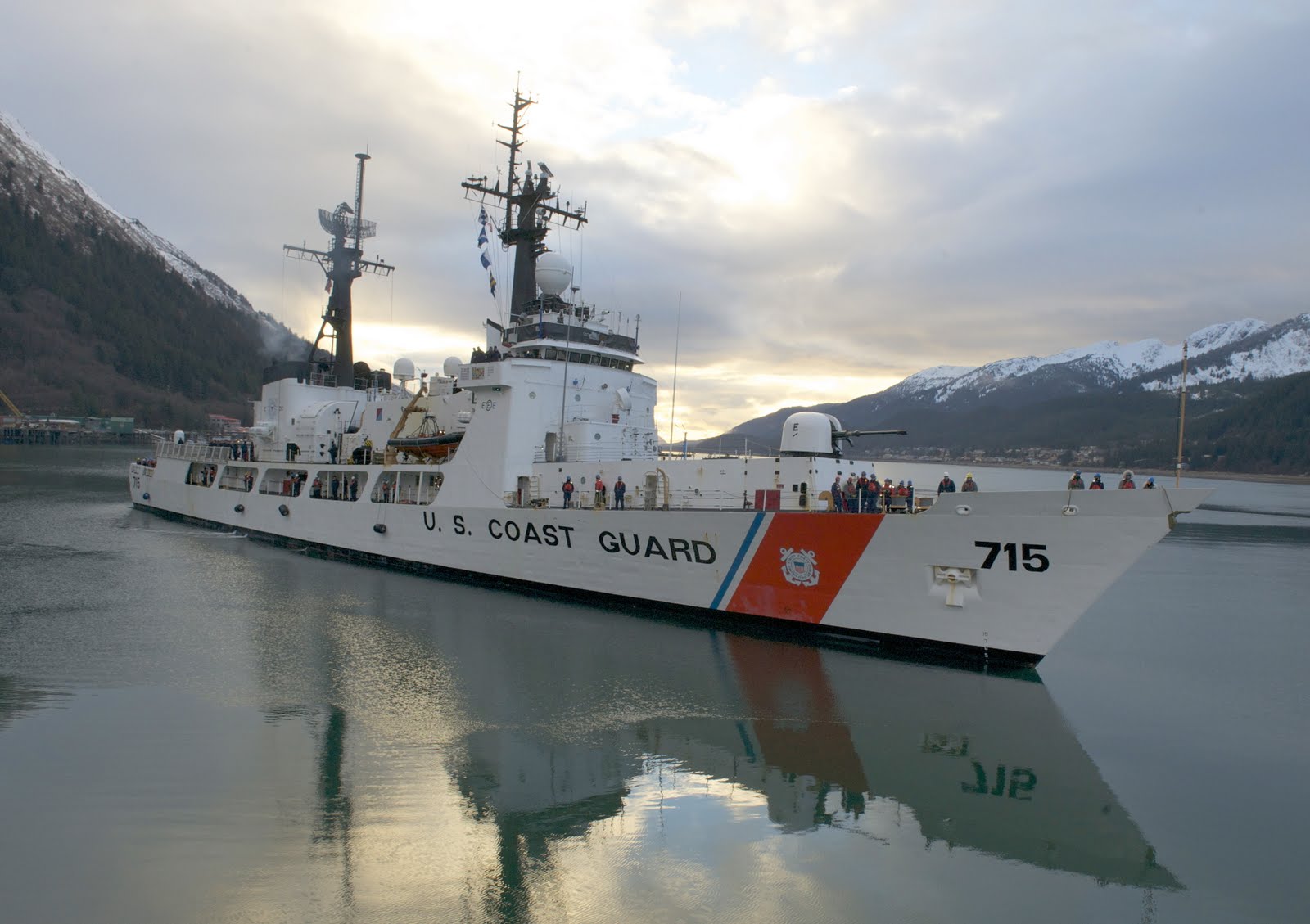 The U.S. Coast Guard cutter Hamilton approaches the Juneau pier Friday after a three-month patrol of the Bering Sea. Commissioned in 1967, the Hamilton is homeported at San Diego. USCG photo
 Bering Sea pollock fishery recertified sustainable
Here's the press release from the Marine Stewardship Council.
Most Alaska groundfish catches to surge in 2011
The North Pacific Fishery Management Council this morning set the 2011 total allowable catch for pollock and other groundfish.
The limits are subject to final approval by the U.S. commerce secretary.
Here's a rundown of the major species, the catch limits and the percentage change from the 2010 limits.
Bering Sea and Aleutian Islands
Pollock — 1.25 million metric tons, up 54 percent
Pacific cod — 227,950 tons, up 35 percent
Yellowfin sole — 196,000 tons, down 10.5 percent
Atka mackerel — 53,080 tons, down 28 percent
Pacific Ocean perch — 24,700 tons, up 31 percent
Gulf of Alaska
Pollock — 96,215 tons, up 13.5 percent
Pacific cod — 65,100 tons, up 9 percent
Arrowtooth flounder — 43,000 tons, no change
Pacific Ocean perch — 16,997 tons, down 3 percent
Sablefish — 11,290 tons, up 9 percent
The limits are subject to final approval by the U.S. commerce secretary.
Here's a rundown of the major species, the catch limits and the percentage change from the 2010 limits.
Bering Sea and Aleutian Islands
Pollock — 1.25 million metric tons, up 54 percent
Pacific cod — 227,950 tons, up 35 percent
Yellowfin sole — 196,000 tons, down 10.5 percent
Atka mackerel — 53,080 tons, down 28 percent
Pacific Ocean perch — 24,700 tons, up 31 percent
Gulf of Alaska
Pollock — 96,215 tons, up 13.5 percent
Pacific cod — 65,100 tons, up 9 percent
Arrowtooth flounder — 43,000 tons, no change
Pacific Ocean perch — 16,997 tons, down 3 percent
Sablefish — 11,290 tons, up 9 percent
A 56 percent hike in Bering Sea pollock catch?
 Going on sale next year. Deckboss photo
The National Marine Fisheries Service has posted its draft assessment of the eastern Bering Sea pollock stock, and it indicates we could see a big increase in the commercial catch limit for 2011.
Scientists recommend an "acceptable biological catch" of 1.267 million metric tons. They project a 2012 ABC of 1.595 million tons.
Regulators often set the annual commercial harvest limit — what's known as the total allowable catch — at the same level as the ABC.
For this year, the ABC and the TAC were identical at 813,000 tons.
So, a TAC of 1.267 million tons for next year would be a nearly 56 percent increase!
How can this be?
Well, among other factors, the scientists say their at-sea surveys this year yielded better than expected pollock biomass estimates. See page 2 of the draft assessment for a quick summary.
This news is bound to relieve the pollock industry, which has lived with poor catch limits the past three years.
But critics of how the pollock fishery is managed likely will be alarmed at the prospect of a larger commercial catch.
Pollock is the largest U.S. fishery by weight, and one of the most lucrative. The lanky bottom fish are used for a variety of familiar products such as fish sticks, the McDonald's Filet-O-Fish sandwich and imitation crab meat.
The North Pacific Fishery Management Council convenes next month in Anchorage to consider the data and recommend a 2011 pollock TAC to the commerce secretary, who has final say.
Bering Sea crab quotas announced
The Alaska Department of Fish and Game today announced catch limits for the Bering Sea crab fisheries opening Oct. 15:
Bristol Bay red king crab: 14.8 million pounds, down 7.5 percent from last season.
Bering Sea snow crab: 54.3 million pounds, up 13 percent from last season.
Bering Sea bairdi Tanner crab: Fishery closed due to low mature female biomass. Last season's quota was 1.35 million pounds.
St. Matthew Island blue king crab: 1.6 million pounds, up 37 percent from last season.
St. Matthew Island blue king crab: 1.6 million pounds, up 37 percent from last season.
Subscribe to:
Posts (Atom)